
Yoga Pose Mythology: The Merchant, the King, and the Gift of the Goddess
Updated: Apr 13
In moments of transition, when life shifts and the familiar feels distant, we are called to sit in our own power. Throne Pose (Bhadrasana) offers a space to do just that, a place to cultivate poise, strength, and presence. Rooted in the story of Durga, the Great Mother Goddess, this posture reminds us that sovereignty is not something we earn from the outside world, but something we claim within ourselves. Through seated centering and mindful movement, we can reconnect with our own steadiness, honoring the strength that has always resided within us.
Throne Pose, aka Baddha Konasana or Bhadrasana
Throne Pose invites us to balance openness with stability, courage with humility, and to meet ourselves fully—body, mind, and spirit—where we are. The divine feminine, embodied in Durga, reflects both the power to protect and the wisdom to guide. And while today we explore her steady, regal energy, we also sense the transformative fire that will appear in her fiercer aspect, Kali, who awakens the inner strength we may not yet know we possess.
More commonly known as Baddha Konasana or Bound Angle Pose, Bhadrasana, or Throne Pose, is a staple in active asana classes. To come into the pose, sit tall with your legs straight, you can use a wall or piece of furniture for support if needed. Bend your knees to bring the soles of your feet together, allowing your knees to open gently out to the sides. Hold your ankles, feet, or big toes. Then, extend your arms fully and lift your chest between your upper arms, creating space and steadiness in your torso.
Physically, Bhadrasana offers a host of benefits, supporting digestion and circulation, relieving sciatica and headaches, and easing menstrual and menopausal discomfort. Throne Pose also helps regulate blood pressure and strengthen the bladder and uterus. It opens the chest, hips, and groin, while promoting overall reproductive, prostate, kidney, and urinary tract health.
But its effects go beyond the physical. Bhadrasana encourages the body and mind to release stress, anxiety, mild depression, and emotional tension. It draws attention inward and quiets the sympathetic nervous system, easing the fight-or-flight response and activating the parasympathetic nervous system, the rest-and-digest system, allowing the body to enter a deep relaxation state and reduce fatigue. These benefits make Throne Pose a beloved posture in Restorative Yoga classes and home practices, cherished by teachers and students alike.
We often turn active asana into a practice of stillness and reflection. Throne Pose is no exception. The posture becomes deeply restorative when practiced in a reclined, fully supported form. With the help of blankets, blocks, and bolsters, Supported Reclined Throne Pose (Salamba Supta Bhadrasana) also known as Reclining Bound Angle Pose (Supta Baddha Konasana) can be arranged to ground the body or create the sensation of floating gently on your props. Either way, this pose offers a beautiful opportunity to release stress and anxiety, while allowing us to step away, even momentarily, from the noise of the body, the mind, and the outside world.

Yoga Pose Mythology: The Stories About Throne Pose
Long ago, there was a king named Suratha. He ruled his kingdom with wisdom, humility, and grace, treating all of his subjects as he would his own family and friends. His kingdom was prosperous and wealthy, until it came under siege, overrun by the armies of neighboring lords and the unscrupulous ministers of his own court. In defeat and with a heavy heart, King Suratha left his kingdom, mounting his horse and heading into the darkness of the forest to grieve and ponder his misfortune.
Suratha traveled deep into the forest, where he discovered the ashram of the great sage Medhas. The area around the ashram was so consecrated with compassion and truth that even the wild animals were tame, and Suratha began to find peace and rest within himself. He felt happy and content, yet soon he was reminded of how deeply he cared for his family, his friends, his subjects, and the overall welfare of his former kingdom.
Just as Suratha was lost in his lamentations, a merchant, looking as downtrodden as Suratha felt, crossed his path. Moved by compassion and empathy, Suratha asked the merchant about his troubles. The merchant shared that he had been betrayed by his family for his wealth, exiled from his home kingdom, and forced to wander the land as a beggar.
The two became fast friends as they realized how much they had in common, yet also understood that they could not help one another overcome the grief of losing all they loved. Suratha told the merchant, “We are the blind leading the blind! Let’s go visit the sage Medhas at his ashram. I’m sure he’ll have wise words to help us learn and grow.” And so, off to the ashram they went.
Upon meeting Medhas, the king asked him to help them move forward past their attachments to what they loved but had lost. Suratha and the merchant sat before the sage as he explained that we all live in a world colored by the illusion of separation, a delusion fostered by our attachments to the people and things we hold dear. Medhas went on to teach Suratha and the merchant that Mother Maya and Mother Wisdom are two aspects of the Great Goddess Durga.
The Great Goddess Durga
The goddess, Mother Maya, may lead us into illusion, but she is also Mother Wisdom, fully equipped to guide us out of our delusions. Durga is indeed the Great Mother Goddess, the Divine Queen, and the source of all power and sovereignty. She does not occupy a throne, she is beyond the need for one, for she is sovereignty itself.
“Enlightenment and illusion, moksha and maya, both are divine, for without the world of separation, name and form, souls could not exhaust their karmas and learn their lessons.”
~Dr. Raj Balkaran from "The Stories Behind the Poses: The Indian Mythology That Inspired 50 Yoga Postures
As a warrior goddess, she is both beautiful and fierce. One story of her creation tells that Durga was brought forth by other great and powerful gods and goddesses (devas) to defeat the indestructible buffalo demon (asura) Mahish and his father, the dreadful and equally indestructible Raktabija, in the battle for domination of all the realms. Mahish had become invincible due to a boon he had been granted, he could only be defeated by a powerful woman.
After thousands of years of war, Shiva called upon the devas to gather and devise a plan to finally defeat Mahish and his demon army. He suggested that each contribute an aspect of their power to create a new goddess, one who would embody all power, poise, and humility. The devas agreed.
Lord Brahma, god of creation, gave her two grounded feet. Surya, god of warmth and illumination, provided Durga’s elegant toes. Lord Vishnu, god of preservation and protector of the universe, granted her six strong arms, and the Vasus, keepers of the elements of nature, fashioned her long, graceful fingers. Varuna, holder of divine authority and upholder of truth and justice, supplied her shapely thighs and calves. Bhudevi, Mother Earth herself, gave her beautifully wide hips. Shiva’s light formed her stunning face. Kubera, god of wealth, gifted her spunky nose, and the Sandhyas, gods of dawn and dusk, shaped her alluring eyebrows. The breath of Vayu, god of air and the four winds, fashioned her sweet ears. And finally, Yama, god of death and judge of souls, contributed his light, which became Durga’s long, lustrous, flowing hair.
From these gifts of the gods, combined with the power and light of all the devas, Mahadevi (Durga) emerged into being. Armed with a sword, club, and chakra (discus), she rode fiercely onto the battlefield on a tiger or lion. Durga, whose name means invincible or fortress, battles against the injustices and sufferings of the universe.

The wise sage Medhas went on to teach the merchant and King Suratha about Durga’s immense strength, power, and wisdom. He shared stories of how she saved all of creation from the asuras and protected the kingdoms, wealth, and thrones of many rulers in heaven and on Earth. He advised the men to recognize both the power of maya (delusion) and the power of wisdom, forces that are given and removed by the Great Mother Goddess, Durga. To have their desires fulfilled and their paths guided, Medhas encouraged them to worship and take refuge in Durga alone.
Suratha and the merchant graciously thanked Medhas for sharing his wisdom with patience and compassion. Together, they ventured into the forest, built an altar to Durga, and began their austerities. Day and night, they worshipped her with offerings of fruits and flowers, incense, water, and flame. They meditated on her divinity and power, chanted her praises, and sang of her poise, beauty, and strength. In time, both became devoted followers of Durga—fierce and loving protector, destroyer of illusions, and source of great strength. After three years of humble worship, pleased by their penance, Durga appeared before them and offered each a boon of their choice.
The merchant asked for supreme knowledge, the kind that would allow him to transcend the ego. The king, however, asked for the return of his beloved kingdom.
Durga granted both wishes. The merchant was instantly liberated, free from the sense of “I” and “mine,” free from the cycle of karma, the endless wheel of rebirth and death. To receive his gift, the king would need to confront his enemies victoriously within three days; by her grace, his kingdom would be restored, and he would rule for the rest of his life. In his next life, he would be rewarded again, reborn as the son of the sun, Manu.
The merchant and Suratha once again sang her praises in celebration of their great gifts—the merchant’s liberation and the king’s restoration to his throne, with the additional blessing of becoming Manu in the next age of time, a reward for his deep care for the world.
Inspiration for Your Practice
Let the story of Durga and the practice of Throne Pose, Bhadrasana remind you of the strength, poise, and wisdom already within you. Sit in your own heart with confidence, honoring both your power and your humility. Carry this steadying energy with you off the mat, allowing it to guide your thoughts, actions, and intentions.

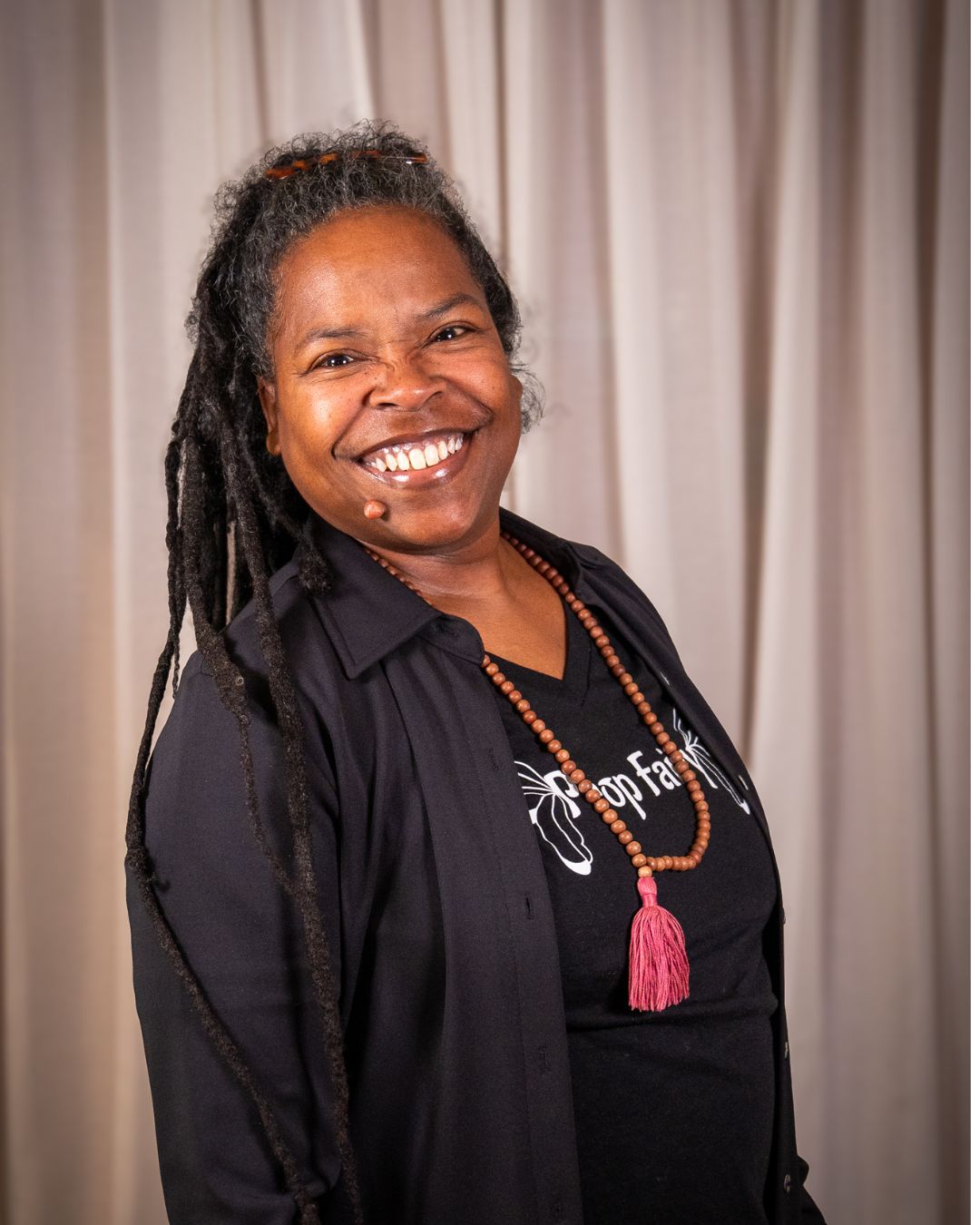
Tuesday is a regular contributor to our Free Resources Blog. To read more of Tuesday's wonderful writing, subscribe to Tuesday's Mindful Moments on Substack.
You can also find Tuesday in weekly classes on this platform. She teaches Tuesday Tension Tamer on Tuesdays at 7 PM ET and Restorative Yoga on the fourth Thursday of each month at 7 PM ET. Her Sunday Sanctuary class is free on the first Sunday of each month.


Comments