
Yoga Pose Mythology: When Kālī Dances Shava to Shiva
The Story of Shavasana

Śavāsana शवासन (pronounced sha-VA-sa-na), Corpse Pose, is the āsana—pose, posture, or seat—of final repose. This āsana appears during physically active practice as a pose of integration, offering space for the body, breath, and mind to assimilate what has come before. At the end of practice, śavāsana allows time for the effects of the entire practice to settle and integrate.
As a Restorative pose, śavāsana is, of course, a pose of repose. With the harmonious arrangement of props such as blankets, bolsters, pillows, and yoga blocks, however, the shape becomes something more than simply lying down. The body is fully supported, creating the conditions for deep rest and giving the nervous system time and space to settle, regulate, and restore.
Kālī's Story Tells Us More
In Śākta (pronounced SHAK-ta) mythology, the stories of the Goddess—Devī or Śakti (pronounced SHAK-ti)—celebrate the supreme divine feminine energy in all of her forms. Devī is the ultimate creator, preserver, and destroyer of the universe. She is Mother Earth, nature, and the creative force that gives form to life. In her most fierce form, she is Kālī, Goddess of time and destruction.
Kālī is often depicted with black skin and wild, unbound hair. She has four arms: one holds a sword, another the severed head of an asura—an energetic force that threatens to destroy the order of the cosmos—while a third hand offers blessings and protection, the fourth holds a bowl to collect and drink the blood of her enemies. Around her neck hangs a garland of severed heads, and a belt of severed arms encircles her waist. Her third eye blazes with red-hot fire, and her outstretched tongue is stained and drips generously with blood.

She is terrifying—and deliberately so.
Kālī’s power over time and destruction is not simply the power to conquer enemies and demons. She is the Mother Goddess who destroys our illusions of reality, māyā, and guides us toward liberation, mokṣa (pronounced moksha), from saṃsāra, the cycle of birth, death, and rebirth. What she destroys is not life itself, but the ignorance and illusion that prevent us from recognizing what is true.
In Śākta stories, Śiva (pronounced Shiva), Lord of the Dance, is not always the dancing god or the hermit meditating for centuries on Mount Kailāsa.

In the presence of Kālī, he is śava—a corpse, inert and lifeless. Without Kālī’s dance, he would remain a corpse.
The Story of Śavāsana
And this is where the story of Kālī and Śiva becomes a story about śavāsana.
In one telling, Kālī becomes so consumed by the fury of battle that her dance of destruction cannot be stopped. She moves across the battlefield with such force that the devastation threatens to continue without end. The gods are unable to restrain her.
So Śiva, her husband, lies down among the bodies of the dead.
When Kālī's foot lands upon his chest, she suddenly recognizes him beneath her. Her tongue, stained and dripping with blood, extends in shock, and her furious dance comes to an abrupt halt.
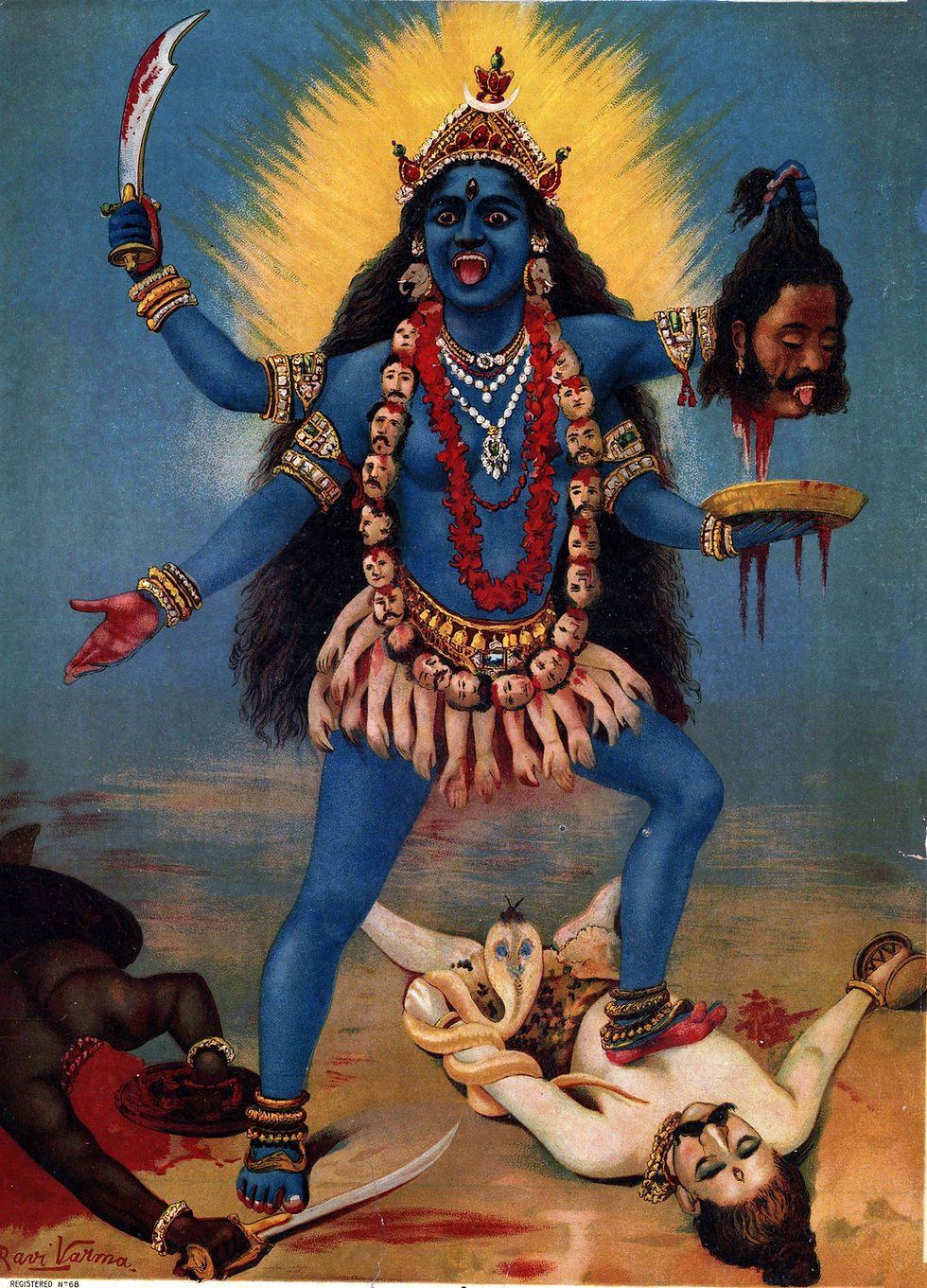
The image is striking: Kālī, the embodiment of fierce, transformative energy, dancing on Śiva, the Dancing Lord of Destruction, who lies beneath her as śava, a corpse.
Yet this is not a story about one defeating the other.
It is a story about what happens when substance and spirit meet.
Substance & Spirit
There is an eternal question: Which is greater, substance or spirit?
These two principles are always connected. The Mother Goddess is earth; she is substance, material reality bound by space and time. Śiva is spirit, a disembodied life force. He cannot function without earth's existence and a body through which to communicate with the world.
Substance and spirit need each other. They must come together, integrating the qualities of each, to create life.
“...he needs her to sense himself; she needs him to enliven her.” ~Devdutt Pattanaik, Indian Mythologist
Without Śakti, Śiva is śava.Without Śiva, Śakti has no consciousness through which her creative power can be known.
Together, they become something more.
Rigid vs. Restful

Śavāsana has been called one of the most challenging poses that we practice. In some traditions, this is particularly true because Corpse Pose is practiced by holding the body rigidly, as though in rigor mortis. There are traditional depictions of practitioners in śavāsana that show the body supported between two blocks—one supporting the head, the other supporting the ankles—creating an experience that sounds anything but restful.
For many modern practitioners, however, the challenge is different.
We may find it difficult to settle the body completely after an active practice. We may discover that when the body becomes still, the mind becomes louder. Emotions may surface. Feelings we have been carrying may finally have enough space to be noticed.
The Gift of Śavāsana
A regular, supported Restorative śavāsana practice provides time and space for the body to release unnecessary effort and for the mind to soften its grip. With the support of blankets, bolsters, pillows, and blocks, we can experience what it means to be held rather than to hold ourselves together.
Perhaps this is why Corpse Pose is the perfect place for the practice to adjourn.
We have moved. We have breathed. We have exerted, stretched, strengthened, released, and focused. Now we stop.
But stopping is not the same as ending.

In śavāsana, we become still enough to integrate what the practice has awakened. Like Śiva beneath Kālī's feet, we enter a state that appears inert from the outside, yet something profound is taking place within. The body rests. The nervous system settles. The breath finds its natural rhythm. The scattered pieces of our experience begin to come together.
The corpse is not the end of the story.
Śava becomes Śiva.
And perhaps this is the deeper invitation of śavāsana: to discover that stillness is not lifelessness. Rest is not absence. Surrender is not defeat. Sometimes we must become quiet enough to allow what is essential within us to awaken.
In the stillness of śavāsana, Corpse Pose, we do not become less alive.
We make space to remember what it means to be fully alive.
We reconnect the Self with ourselves.

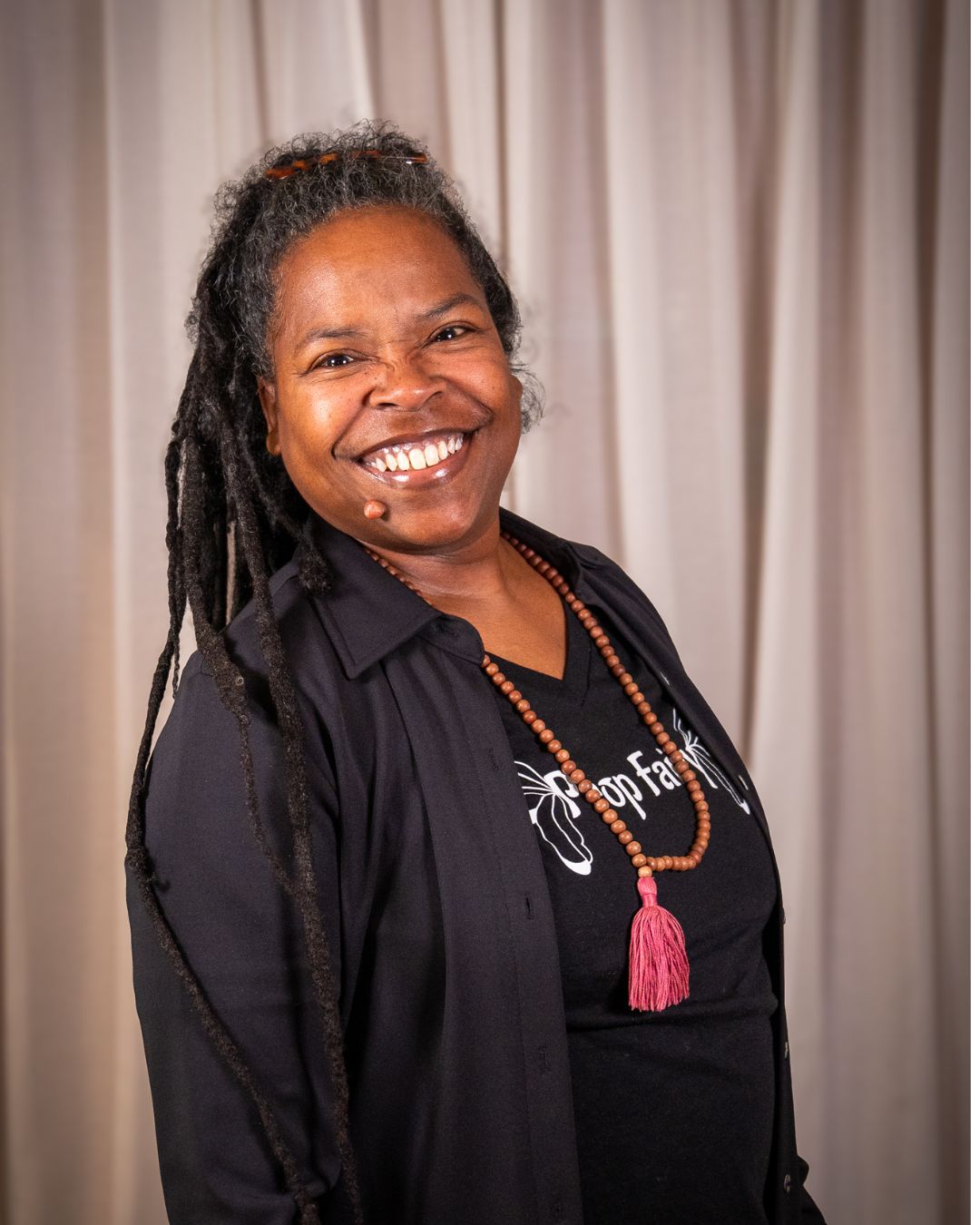
Tuesday Irby writes the Yoga Pose Mythology series here on the TLYoga Free Resources Blog.
You can also read more of Tuesday's inspiring and insightful writing when you subscribe to Tuesday's Mindful Moments on Substack.
Join Tuesday classes on Tuesdays (of course!) at 7 PM ET. She also teaches Restorative Yoga on the fourth Thursday of each month at 7 PM ET and a free class on the first Sunday of each month at 11:30 AM ET.


Comments