
Yoga Pose Mythology: The Dance Between Within
Finding Wholeness Through Integration
The practice of yoga is much more than moving the body through various shapes. The postures invite us to notice and embody the fullness of the breath, the strength and steadiness of the body, and the quiet integration of body, breath, and mind through stillness. As our practice deepens, the shapes become familiar. Effort gradually gives way to ease, and we begin to notice the subtle connections from one moment to the next.
Over time, we discover that yoga is not simply a collection of individual postures, but a meaningful whole that reflects our own life’s journey.
One of the most profound expressions of this wholeness is Ardhanārīśvara (अर्धनारीश्वर) (pronounced Ard-hu-nA-rEEsh-vu-ruh), the Half-Female Lord, the divine union of Pārvatī (pronounced pAr-vu-tEE) and Śiva (pronounced ShEE-va).

Pārvatī, the great mother goddess, embodies love, devotion, nurture, and the rhythms of home and family.
Śiva embodies transformation, discipline, dissolution, and renewal.
Most depictions show Pārvatī on the left side and Śiva on the right, the two existing not as opposing forces, but as a single divine being.

According to one beloved tradition, Pārvatī and Śiva were worshiped together as the divine couple. Yet there was one devoted sage named Bṛṅgi (pronounced Brin-gEE) who insisted on honoring only Śiva. Whenever he came to offer his prayers, he circumambulated Śiva alone, deliberately excluding Pārvatī from his devotion.
Pārvatī questioned how anyone could worship transformation while ignoring the love, wisdom, and creative power that made transformation possible. She understood that the masculine and feminine principles are inseparable, each giving meaning and balance to the other. Yet Bṛṅgi refused to change his ways.
Wholeness in Integration
To reveal this truth, Pārvatī united herself completely with Śiva so that together they became Ardhanārīśvara, the Half-Female Lord. No longer could anyone worship Śiva without also acknowledging Pārvatī. Their shared form became a living reminder that wholeness is found not in division, but in integration.

Still, Bṛṅgi remained determined.
Transforming himself into a tiny bee, he flew between the two halves of their shared body so he could continue circling Śiva alone.
In response, Pārvatī withdrew from him everything she had contributed through the feminine principle—his flesh, blood, and vitality—leaving only a skeleton sustained by Śiva’s grace.
Unable to stand, Bṛṅgi collapsed.
Moved by compassion, Śiva granted him a third leg so that he could once again find his balance.
Neither Creation Nor Transformation Exists in Isolation
Bṛṅgi’s devotion reveals an important truth: neither creation nor transformation exists in isolation. Strength without compassion becomes rigid. Love without discipline loses direction. Wisdom without action remains unrealized.
Like Pārvatī and Śiva themselves, the seemingly opposite qualities within us are not meant to compete, but to complete one another.

The image of Ardhanārīśvara invites us to recognize that yoga is not about becoming one thing while rejecting another. Rather, it is the continual practice of integrating what may seem separate—strength and tenderness, action and stillness, discipline and compassion, receiving and releasing. In this way, yoga becomes a practice of returning to wholeness.
Through practice, we are not trying to become someone else. We are continually becoming our whole Self.

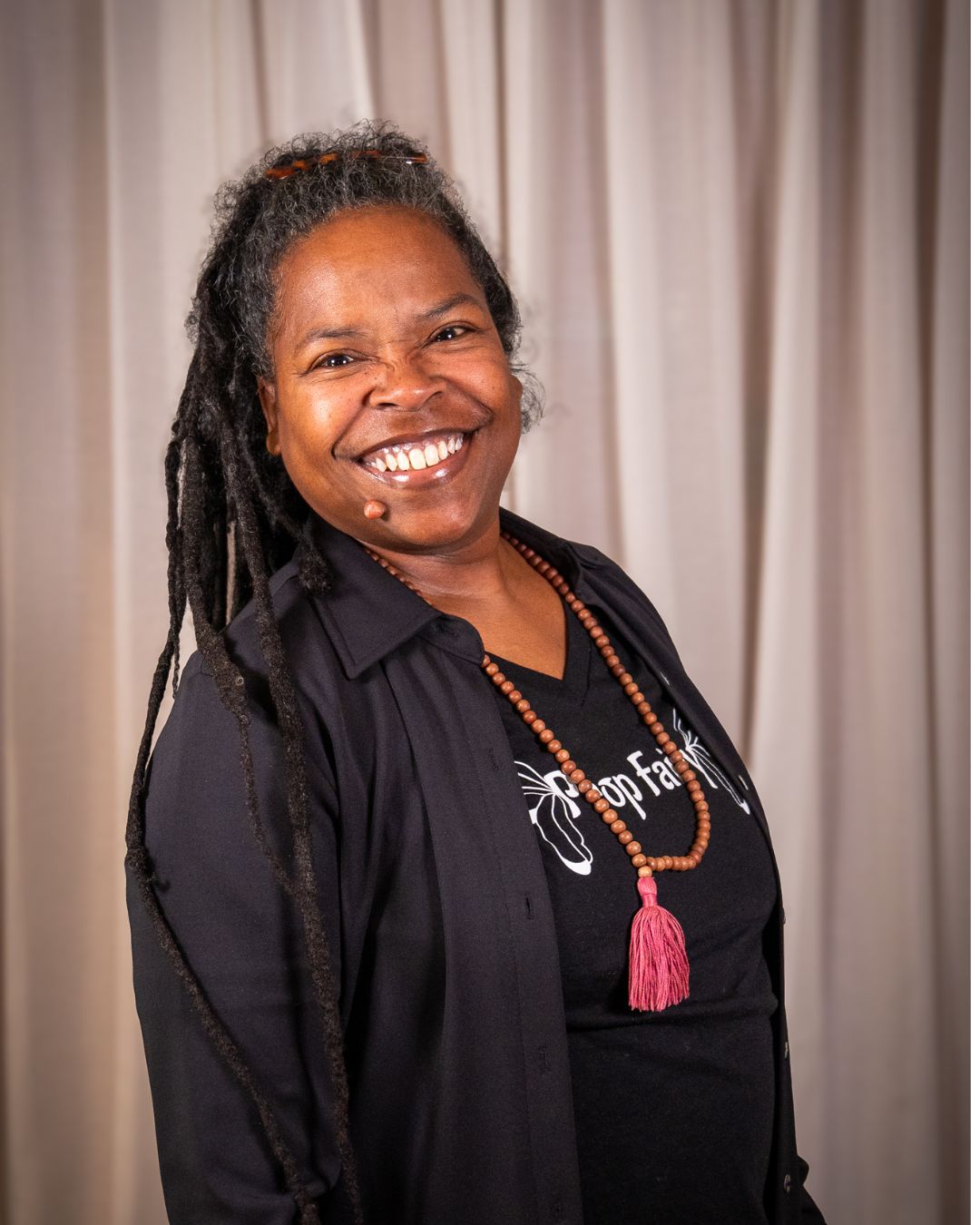
Tuesday Irby writes the Yoga Pose Mythology series here on the TLYoga Free Resources Blog. You can also read more of Tuesday's writing when you subscribe to Tuesday's Mindful Moments on Substack.
Join Tuesday class on Tuesdays (of course!) at 7 PM ET. She also teaches Restorative Yoga on the fourth Thursday of each month at 7 PM ET as well as a free class on the first Sunday of each month at 11:30 AM ET.


Comments