
Yoga Pose Mythology: The Son of Añjanā
The pose Añjaneyāsana carries a story about a mother, her son, and the wisdom that comes from knowing when to reach beyond what we already know.

Long ago, in a forest village at the foothills of the Himalayan mountains, lived the intelligent, powerful, and beautiful Añjanā. Her husband was often away hunting to help support neighboring clans. In his absence, the people of the village turned to Añjanā for leadership and for help maintaining the foundation of their community. She was skilled at foraging and helping the village people weather raging storms. She had courage, great knowledge, and wisdom as a midwife. Most of all, she was dependable.
Añjanā was a patient and consistent devotee of Lord Śiva, the destroyer. When her community duties were completed at the end of the day, she would pray from dusk to dawn, chanting mantras and worshipping the form of Śiva. Añjanā had a Śiva Liṅga, a sacred stone that symbolizes the union of feminine and masculine energy, where she offered fruits, flowers, water, milk, and honey, all for the pleasure of Śiva. This daily ritual was where Añjanā gained the strength and wisdom to be such a support to the people of her village.
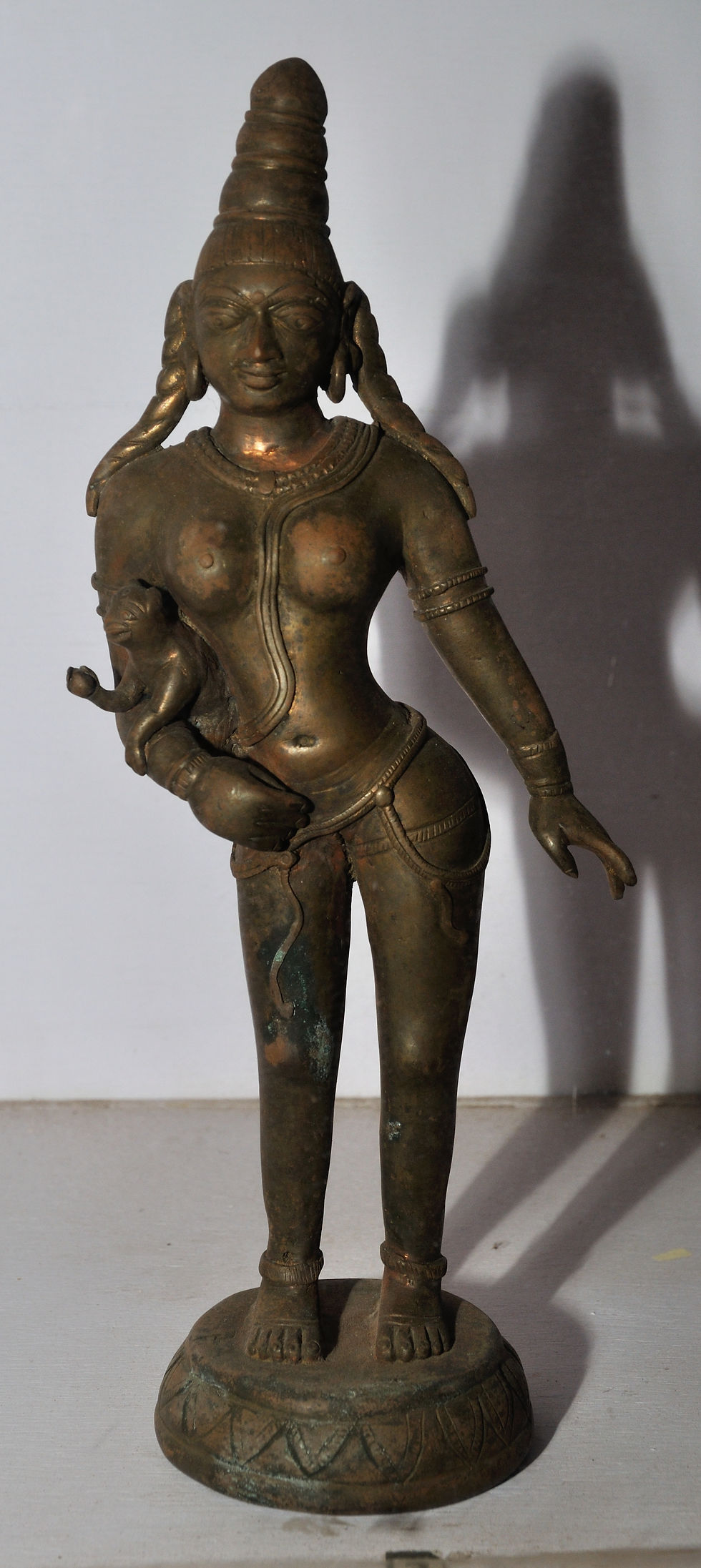
With all of her great power and wisdom, Añjanā lacked the one thing she wanted most: a child. After many years with her husband, she shifted the intention of her daily prayers and offerings to Śiva toward conception. Śiva, of course, was in meditation atop a peak on Mount Kailāsa when he eventually heard Añjanā’s prayer. He was impressed and pleased by her constant devotion throughout the many, many years. He was also very pleased by the way she conducted herself in the village while her husband was away and wanted to grant her a boon. He wanted to give her a son destined to be powerful.
Śiva went to Vāyu, the god of wind, for his help in granting Añjanā’s greatest wish. Vāyu blessed a few grains of rice and gave them to a couple of his bird friends who were going her way. As Añjanā raised her hands to the heavens in prayer, the birds dropped the grains of rice into her hands. Although she found it curious that grains of rice fell from the sky as she prayed, she had great faith and ate the rice. Almost instantaneously, she became pregnant with her long-awaited son.
The son of Añjanā, Anjaneya, was born. This boy grew to be fantastically strong and intelligent, curious and precocious. He loved his mother dearly and was devoted to learning everything that she could teach him. And he did. He watched and learned from her examples of strength, devotion, and wisdom.

Añjanā taught her son a very important lesson early in his youth:
Añjanā: Which is stronger, water or rock?
Anjaneya: Rock.
Añjanā: Sure, that’s what most people would answer, but let’s look a little deeper. Rock is masculine and water is feminine. Masculine forces are outwardly strong, but feminine power comes from within. A stone ax cannot penetrate the tiny cracks in a boulder the way that water can. Water flows, and over time it can use those tiny cracks to split a great boulder.
Your true power will come from within, by way of devotion, surrender, sacrifice, and service to something greater, just like water in those tiny cracks can shift the shape of a great boulder.
Añjanā was proud of her son, and she knew she was teaching him wisdom that would help shape his destiny.
Of course, there came a time when Añjanā had taught Anjaneya all she could teach him, but he wanted more. He wanted to know everything about the world, so she sent him to Sūrya, the sun god. Sūrya saw and knew everything about the world. He traveled the entire sky every day, observing and learning all there was to know.
Because Anjaneya was a demigod—half god and half human—he could do and be anything. He leapt from Earth to speak to the Sun. He asked Sūrya to be his teacher.
Initially, Sūrya denied his request, telling him he had no time to stop and teach him. He traveled all day and slept all night.

Anjaneya assured Sūrya that he did not have to stop. He would ride in the front of his chariot every day. Sūrya warned Anjaneya of the pain he would feel from his blinding light and radiant heat. Anjaneya said, “To acquire great knowledge, there is suffering involved, and it is worth it.”
Sūrya was impressed by Anjaneya’s determination and agreed to teach him about the world. And for thousands of years, Anjaneya rode with Sūrya from sunrise to sunset, absorbing his divine light and knowledge.
There is something to be learned from Anjaneya’s journey toward the sun. His mother had taught him the wisdom she possessed, but she also understood that there was more for him to learn. She did not hold him close to what was familiar. She pointed him toward a greater source of knowledge.
Anjaneya, in turn, was willing to endure the heat and discomfort of the journey because his desire for knowledge was greater than his desire for ease. He understood that reaching a goal requires more than simply wanting it. It requires devotion, determination, surrender, and a willingness to remain committed to the journey.
Perhaps this is the invitation of Añjaneyāsana.

The back leg is grounded. The heart lifts. The arms reach toward the sun. We remain rooted in where we are while reaching toward what we have yet to know. Like Anjaneya, we may discover that the path toward wisdom asks something of us. It may ask us to endure discomfort, to remain devoted when the journey is long, and to keep reaching toward the light.
Sometimes the greatest wisdom we receive is not the wisdom that tells us what we already know. Sometimes it is the wisdom that teaches us to reach higher.

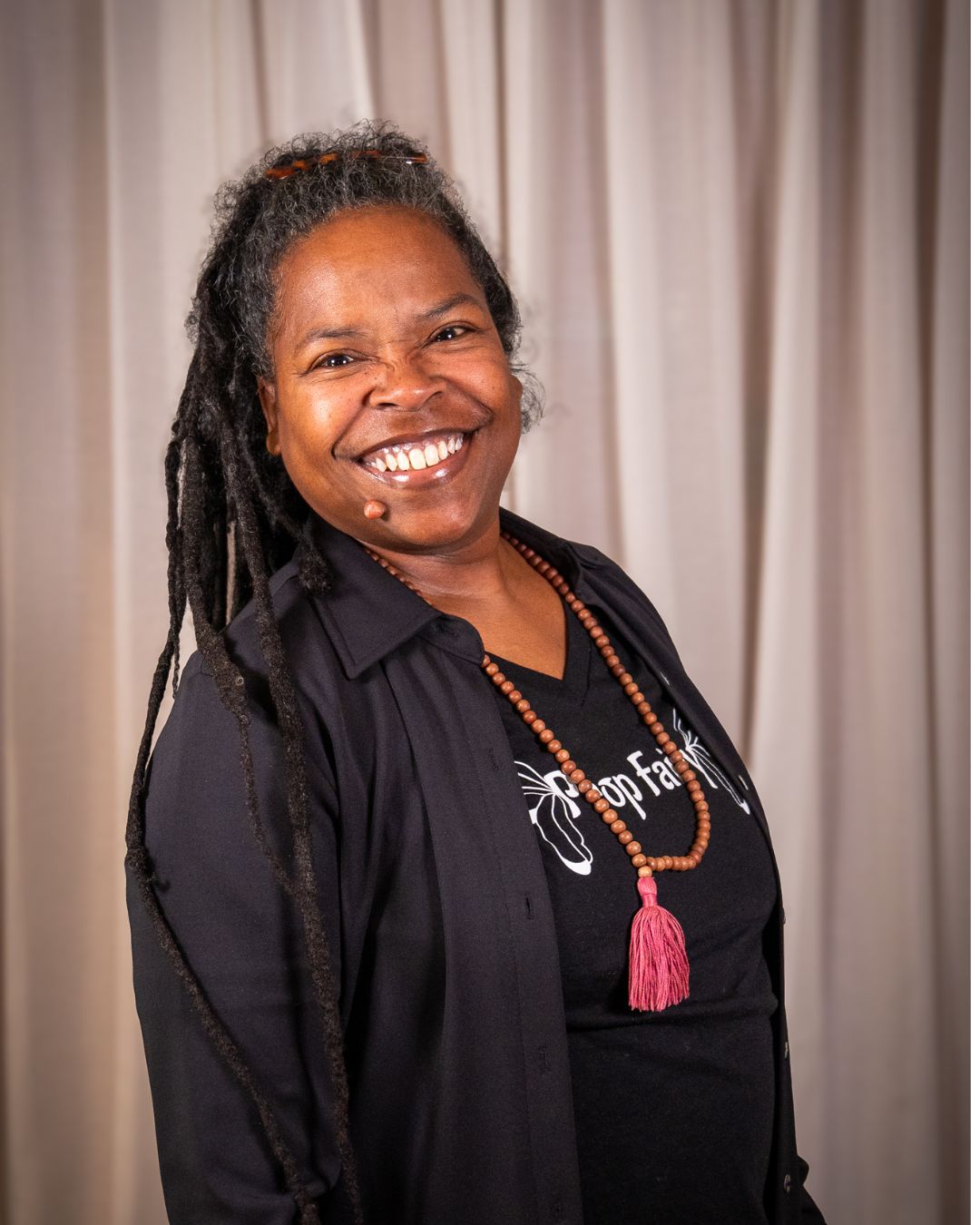
Tuesday Irby writes the Yoga Pose Mythology series here on the TLYoga Free Resources Blog. You can also read more of Tuesday's inspiring and insightful writing when you subscribe to Tuesday's Mindful Moments on Substack.
Join Tuesday's class every Tuesday at 7 PM ET and on the fourth Thursday of each month, plus on the first Sunday of each month at 11:30 AM ET.


Comments