
Yoga Pose Mythology: The Soft Arc of Grace, the Stillness and Strength of Surrender
Take some time to fold inward and settle into a practice rooted in steadiness and care. Allow yourself space to be held in the sacred curve of Child’s Pose, Bālāsana बालासन. Know that while you are always held by grace, this is a space where you can find your own steady presence, support and unwavering strength within your Self.

In Child's Pose we fold ourselves into a shape of humility, surrender, and trust. This gentle, restorative posture is often a place of beginning or return. It soothes the nervous system, calms the mind, and opens the back body with quiet invitation. The hips soften. The spine settles. The breath deepens. It is a shape that supports us as we let go and rest.
Bāla बाल means child, and āsana आसन means pose, posture, or seat. Bālāsana बालासन is the seat, posture, or pose of the child.
Fascinatingly, some posture lineages use the word Balāsana बलासन for the name of this pose. The short "a" sound in the word bala बल transforms the word child into a word that means strength. This word play is not a coincidence or an issue of mistranslation. It's a clever invitation into a favorite story about the origin and deeper meaning of the pose.
There are many stories that trace the origin and deeper meaning of Bālāsana, but one that lingers in my heart features Lord Kṛṣṇa (pronounced Krishna), the divine embodiment of protection, tenderness, and love. In the stories of his childhood, Lord Krishna is often referred to as Bālakṛṣṇa or Child Krishna.

Krishna, born under miraculous circumstances, grew up surrounded by wonder and affection. Though those around him knew of his divine nature, Krishna's mischievous playfulness lulled them into līlā लीला, a forgetfulness of his divinity. This divine forgetfulness was not deception, but a gift: an invitation to engage with the sacred in the simplest and most ordinary moments of life.
One day, Krishna and his brother Balarama were playing outside when Krishna scooped up a mouthful of dirt. Alarmed, his brother rushed to tell their mother. She came out calmly, found Krishna with a dirt-smeared face, and asked, “Have you been eating dirt?”
Krishna denied it. With the charm of an innocent child, and a hint of cosmic mischief, he accused his brother of lying. But his mother insisted that he open his mouth. And when he did, she did not see dirt. She saw everything: galaxies, stars, the whole of the universe and creation swirling in brilliance inside her little boy’s mouth.

Overcome by the sudden remembrance of her son's divinity, she cowered in fear and worry about her ability to parent a divine being. To assuage her fears, Krishna returned her veil of forgetfulness so that she could continue to love and raise him like a son.
Meanwhile, Balarama fell to his knees, folded forward over his legs in a deep bow of respect as he reached forward to touch Krishna's feet with great reverence. His bow, often called a pranāma प्रणाम, looked just like the pose we call Child's Pose today. Balarama was strong enough see the Divine nature of Krishna and continue to be his brother.
This story reminds us that divinity lives within each of us and even in our smallest and most human moments, we can turn inward with respect and reverence.
So in Bālāsana, we draw inward, not to hide, but to remember and to find strength. This posture wraps the body around the heart, offering protection and softening. It is a shape of sacred pause, where we can offer ourselves the grace to be held, to release, and to remember what lives within.

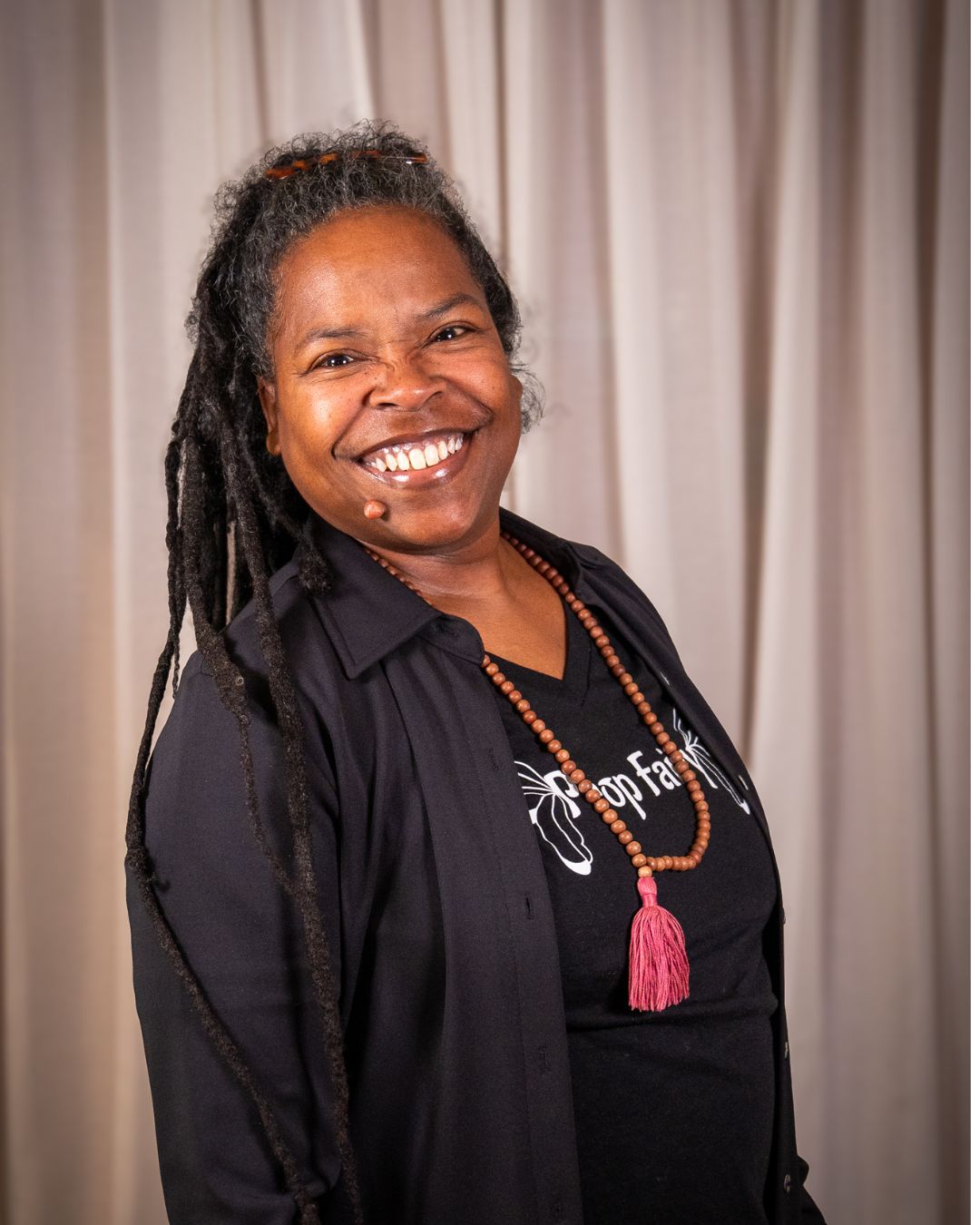
Tuesday is a regular contributor to our Free Resources Blog. To read more of Tuesday's wonderful writing, subscribe to Tuesday's Mindful Moments on Substack.
You can also find Tuesday in weekly classes on Tuesdays at 7 PM ET and on the fourth Thursday of each month at 7 PM ET. Her Sunday Sanctuary class is free on the first Sunday of each month.


Comments